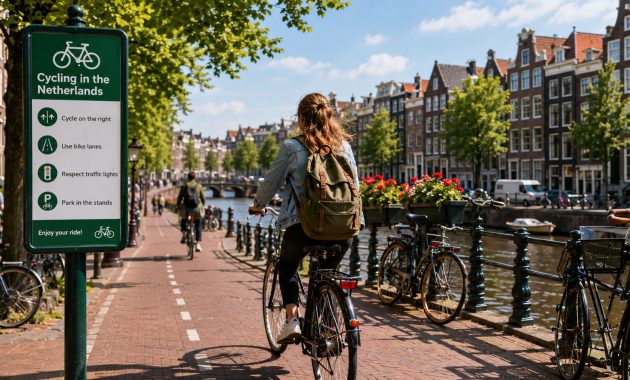
If there’s one experience that truly defines a trip to the Netherlands, it’s cycling.
On my first morning in Amsterdam, I was amazed by the endless stream of bicycles gliding silently through dedicated bike lanes. Business professionals rode to work in suits, parents transported children in cargo bikes, students pedaled effortlessly to university, and tourists explored canals on rental bicycles. Cycling wasn’t simply a recreational activity—it was an integral part of daily life.
The Netherlands is widely regarded as one of the world’s most bicycle-friendly countries. With more than 35,000 kilometers (22,000 miles) of dedicated cycling paths, flat landscapes, well-designed infrastructure, and a cycling culture that spans generations, there’s no better place to experience life on two wheels.
Whether you’re planning to ride through Amsterdam’s historic canals, cycle past colorful tulip fields, explore national parks, or visit charming villages, this complete guide to cycling in Netherlands covers everything tourists need to know before renting a bike.
Why the Netherlands Is the World’s Cycling Capital
Cycling isn’t just popular—it is part of Dutch culture.
The country has:
- One of the highest bicycle ownership rates in the world
- Extensive cycling infrastructure
- Dedicated traffic signals for cyclists
- Bicycle parking facilities almost everywhere
- Safe, well-maintained cycling routes
- Flat terrain suitable for all fitness levels
In many cities, bicycles outnumber cars, and in some places there are even more bicycles than residents.
For visitors, this means cycling is often the fastest, cheapest, and most enjoyable way to explore.
Why Tourists Should Rent a Bike
Many first-time visitors assume they’ll rely on trains and trams.
While public transportation is excellent, cycling offers unique advantages.
Benefits of Cycling
- Explore at your own pace
- Reach hidden neighborhoods
- Stop whenever you like for photos
- Avoid traffic congestion
- Save money on local transport
- Experience Dutch culture like a local
- Enjoy environmentally friendly travel
Many attractions are connected by scenic cycling routes that vehicles simply cannot access.
Where to Rent a Bicycle
Renting a bike is incredibly easy throughout the Netherlands.
You’ll find rental shops near:
- Railway stations
- City centers
- Tourist attractions
- Hotels
- Campgrounds
Most rental companies offer daily, weekly, and even monthly rates.
Types of Bicycles Available
Choosing the right bicycle depends on your travel style.
City Bikes
The most common rental option.
Perfect for:
- Sightseeing
- Urban exploration
- Casual rides
Electric Bikes (E-Bikes)
Ideal for:
- Longer distances
- Older travelers
- Rural routes
- Less experienced cyclists
Electric assistance makes even full-day rides comfortable.
Cargo Bikes
Popular with families.
These larger bicycles can carry:
- Young children
- Shopping
- Picnic supplies
Tandem Bikes
A fun option for couples and friends who want to ride together.
Touring Bikes
Designed for:
- Multi-day cycling holidays
- Long-distance routes
- Carrying panniers and luggage
Average Bicycle Rental Prices
| Bicycle Type | Typical Daily Cost |
|---|---|
| Standard City Bike | €12–€20 |
| Electric Bike | €25–€45 |
| Cargo Bike | €30–€50 |
| Touring Bike | €20–€35 |
| Tandem Bike | €30–€50 |
Many rental companies offer discounts for multi-day rentals.
Do You Need to Book in Advance?
Outside the busiest travel periods, most visitors can rent a bike without advance booking.
However, during:
- Tulip season (April–May)
- Summer holidays
- Major festivals
- National holidays
it’s advisable to reserve in advance, especially for electric bikes and cargo bikes.
Understanding Dutch Bike Lanes
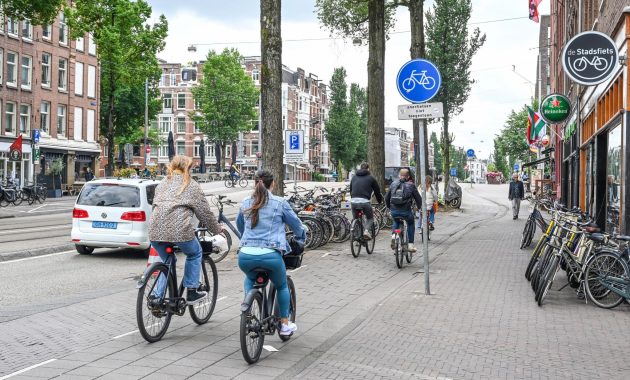
One of the biggest surprises for many tourists is how extensive the cycling infrastructure is.
Dedicated bicycle lanes are found in nearly every city and many rural areas.
They are usually:
- Red-colored pavement
- Clearly marked
- Separate from vehicle traffic
- Well signposted
Cyclists are expected to stay within these lanes whenever possible.
Basic Cycling Rules
Before riding, it’s important to understand the rules of the road.
Ride on the Right
Cyclists ride on the right-hand side of bike paths and roads.
Obey Traffic Lights
Many intersections have dedicated bicycle traffic signals.
Always wait for the green bicycle light.
Signal Before Turning
Use hand signals to indicate:
- Left turns
- Right turns
- Stopping
This helps other cyclists anticipate your movements.
Don’t Ride on Sidewalks
Unless specifically permitted, bicycles belong in bike lanes or on roads—not pedestrian sidewalks.
Use Lights at Night
After dark or in poor visibility, bicycles must have:
- White front light
- Red rear light
Reflectors are also required on most bicycles.
Don’t Use Your Phone While Riding
Using a handheld mobile phone while cycling is illegal and can result in a fine. If you need to check directions, stop in a safe place first.
Cycling Etiquette
Dutch cyclists are confident and efficient.
Following local etiquette makes everyone’s journey smoother.
Keep Right
Ride on the right unless overtaking.
Don’t Stop Suddenly
Move to the side before stopping to take photos or check maps.
Listen for Bicycle Bells
If another cyclist rings their bell, they’re usually asking to pass.
Stay calm and keep to the right.
Avoid Blocking Bike Lanes
Pedestrians should never stand in bike lanes.
Likewise, cyclists should avoid stopping where they obstruct others.
Safety Tips for Tourists
Although cycling is generally safe, visitors should take a few precautions.
Wear Comfortable Clothing
Choose breathable clothes suitable for changing weather conditions.
Lock Your Bike
Bicycle theft is one of the most common crimes in the Netherlands.
Always:
- Lock the frame
- Use designated parking areas
- Never leave your bicycle unlocked
Even a quick café stop can be enough time for a bike to disappear.
Watch for Trams
In cities like Amsterdam, tram tracks can catch bicycle wheels.
Cross tracks at a wide angle to avoid getting stuck.
Stay Alert at Intersections
Cyclists often have priority, but never assume drivers have seen you.
Make eye contact whenever possible.
Carry Rain Gear
Dutch weather can change quickly.
A lightweight waterproof jacket is always worth packing.
Best Cities for Cycling
Amsterdam
Best for:
- Historic canals
- Museums
- Neighborhood exploration
Expect busy bike traffic, especially during rush hour.
Utrecht
Known for:
- Relaxed atmosphere
- Canal-side streets
- Excellent cycling facilities
A great choice for beginners.
Rotterdam
Offers:
- Modern architecture
- Wide cycling paths
- Waterfront routes
The Hague
Perfect for combining city sightseeing with coastal rides to Scheveningen Beach.
Groningen
One of Europe’s most bicycle-oriented cities, with an exceptionally high percentage of journeys made by bike.
Best Scenic Cycling Routes
Tulip Fields (Spring)
During April, cycling through the flower-growing regions near Keukenhof offers unforgettable views of colorful tulip fields.
Hoge Veluwe National Park
De Hoge Veluwe National Park features forests, heathlands, sand dunes, and dedicated cycling paths. Visitors can also use the park’s famous free white bicycles inside the park.
Kinderdijk
Cycle past the iconic windmills of Kinderdijk, one of the country’s most photographed landscapes.
Zaanse Schans
Ride through traditional Dutch scenery featuring historic windmills, wooden houses, and peaceful canals around Zaanse Schans.
Dutch Coast
The North Sea coastline offers hundreds of kilometers of scenic cycling routes connecting beaches, dunes, and charming seaside villages.
Combining Cycling with Public Transport
One of the best things about traveling in the Netherlands is how well cycling integrates with public transportation.
Many train stations include:
- Secure bicycle parking
- Bicycle rental facilities
- Repair stations
- Charging points for electric bikes
You can also take bicycles on many trains outside weekday peak hours by purchasing a bicycle ticket, while folded bicycles are generally carried free of charge.
This flexibility allows you to cycle in one city and continue your journey by train to another destination.
Cycling Apps Worth Downloading
Useful apps can make cycling much easier.
Popular options include:
- Navigation apps with cycling routes
- The NS app for combining trains and bicycles
- Weather apps to monitor changing conditions
- Bicycle route planners highlighting scenic paths
Offline maps are especially useful in rural areas.
Cycling with Children
Families will find cycling remarkably easy in the Netherlands.
Options include:
- Child seats
- Cargo bikes
- Bicycle trailers
- Family-friendly cycling routes
Many parks and recreational areas have traffic-free paths suitable for young riders.
Weather and the Best Time to Cycle
Cycling is possible year-round, but conditions vary.
Spring (March–May)
- Mild temperatures
- Blooming flowers
- Tulip season
- Occasional rain
Summer (June–August)
- Long daylight hours
- Warm weather
- Ideal for extended rides
Autumn (September–November)
- Beautiful fall colors
- Cooler temperatures
- Fewer tourists
Winter (December–February)
- Short daylight hours
- Cold weather
- Wind and rain are more common
Spring and early summer are generally considered the best seasons for cycling.
Common Mistakes Tourists Make
Avoid these frequent errors.
Walking in Bike Lanes
Always check whether you’re standing in a designated cycling lane before stopping for photos.
Forgetting to Lock the Bike
Even in quiet neighborhoods, always lock your bicycle.
Riding Too Slowly in Busy Areas
If you’re uncomfortable in heavy city traffic, consider quieter neighborhoods or parks for your first ride.
Ignoring Bicycle Traffic Lights
Cyclists are expected to obey their own traffic signals.
Carrying Large Bags on the Handlebars
Use a basket or panniers instead, as heavy bags can affect balance and steering.
Suggested One-Day Cycling Itinerary in Amsterdam
| Time | Activity |
|---|---|
| 9:00 | Pick up rental bike near Amsterdam Centraal |
| 9:30 | Cycle through the Canal Belt |
| 11:00 | Visit Vondelpark |
| 12:30 | Lunch in De Pijp |
| 2:00 | Explore Museumplein |
| 4:00 | Ride along the IJ waterfront |
| 6:00 | Return rental bike |
This relaxed itinerary covers many of Amsterdam’s highlights while giving you the freedom to stop whenever something catches your eye.
FAQs – Cycling in Netherlands
Is cycling safe in the Netherlands?
Yes. The country has one of the safest and most extensive cycling infrastructures in the world.
Do tourists need a license to rent a bike?
No. A bicycle license is not required.
Are helmets mandatory?
No. Helmets are not legally required for most cyclists, although wearing one is recommended, particularly for children and less experienced riders.
How much does bike rental cost?
Standard city bikes typically cost between €12 and €20 per day.
Can I cycle between cities?
Yes. Many Dutch cities are connected by excellent long-distance cycling routes.
Can I bring a bicycle on the train?
Yes. Regular bicycles are allowed on many trains outside weekday peak hours with the appropriate bicycle ticket.
Is Amsterdam difficult for beginner cyclists?
The city can feel busy during peak times, but quieter neighborhoods and parks are suitable for beginners.
What should I do if it rains?
Carry lightweight waterproof clothing and continue riding carefully, as most cycling paths remain usable in wet weather.
Where should I park my bicycle?
Use designated bicycle parking areas and always lock your bike securely.
Are electric bikes worth renting?
Yes, especially for longer countryside routes or travelers who prefer extra assistance.
Can children ride safely?
Absolutely. The Netherlands offers numerous family-friendly cycling routes and equipment such as child seats and cargo bikes.
What’s the biggest mistake tourists make?
Standing or walking in bike lanes without realizing cyclists are approaching.
Final Verdict: Why Every Visitor Should Experience Cycling in the Netherlands
Experiencing cycling in Netherlands is about far more than getting from one place to another—it’s one of the most authentic ways to experience Dutch life. Riding along centuries-old canals, through peaceful villages, across colorful tulip fields, or beside windswept dunes allows you to see the country at a slower, more immersive pace than any bus or train can offer.
Whether you’re spending a weekend in Amsterdam or embarking on a multi-city adventure, renting a bicycle is an experience you’ll likely remember long after your trip ends. With world-class cycling infrastructure, clear rules, scenic routes, and a culture built around two wheels, the Netherlands truly is one of the best destinations on Earth for cyclists of every skill level.