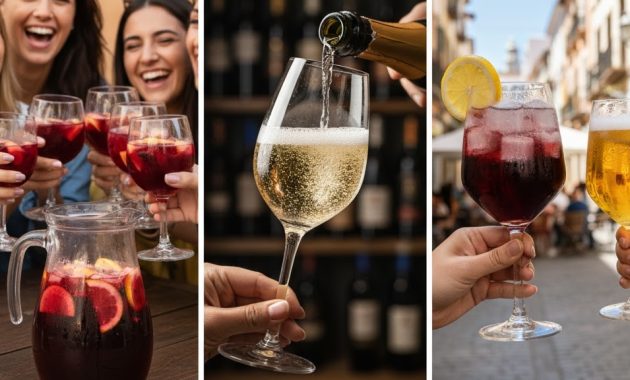
A Toast to Spain’s Spirit
There’s something unmistakably joyful about raising a glass in Spain. Whether it’s a pitcher of sangria shared under the Mediterranean sun or a flute of cava sparkling at a festive table, Spanish drinks carry the soul of celebration. Every sip tells a story — of vineyard-covered hills, centuries-old traditions, and lazy afternoons spent in good company. From the crisp white wines of Galicia to the fortified treasures of Andalusia, Spanish beverages capture the essence of la buena vida — the good life. So, if you’ve fallen in love with Spanish cuisine, it’s time to explore what fills the glasses beside it. Let’s toast our way through the best Spanish drinks and wines across the country.
Sangria: The Symbol of Spanish Summer

Few drinks say “Spain” quite like sangria. This refreshing, fruit-filled concoction blends red wine with chopped fruits, orange juice, and a splash of brandy or soda.
It’s not just a drink — it’s a ritual of togetherness. You’ll find sangria pitchers gracing outdoor terraces from Madrid to Málaga, especially during the long summer months.
Traveler’s Tip: For a lighter local version, try Tinto de Verano — red wine mixed with lemon soda. It’s a simpler, more authentic refreshment often preferred by locals.
Cava: Spain’s Sparkling Celebration

Move over, Champagne — Spain’s Cava shines just as bright. This sparkling wine hails primarily from Catalonia, crafted with the same meticulous method as its French cousin but with a distinctly Spanish heart.
Cava ranges from crisp and dry (Brut) to soft and sweet (Dulce). Pair it with tapas, seafood, or simply enjoy it at sunset.
In Penedès, near Barcelona, you can tour cava wineries (bodegas) and witness the delicate process of bubble-making — an effervescent highlight of any Spanish adventure.
Rioja & Ribera del Duero: Spain’s Red Wine Royalty

If sangria is the soul of Spain, Rioja and Ribera del Duero are its backbone.
- Rioja Wines (from La Rioja) are known for their smooth balance of oak, spice, and red fruit flavors. Aged beautifully, they pair perfectly with roasted meats or tapas.
- Ribera del Duero Wines (from Castilla y León) are bolder — rich, structured, and deeply aromatic. They embody Spain’s passion in a glass.
Both regions produce some of the world’s most celebrated reds, making them essential stops for wine lovers.
Albariño & Verdejo: Spain’s Refreshing Whites

Spain’s white wines are as vibrant as its coastline.
- Albariño, from Galicia’s Rías Baixas, bursts with notes of citrus and sea breeze — the perfect companion for seafood.
- Verdejo, from Rueda, offers a crisp, aromatic flavor ideal for warm evenings and light meals.
These whites are proof that Spanish wine isn’t just about reds — it’s about balance, freshness, and discovery.
Sherry (Jerez): The Taste of Andalusian Heritage

Welcome to Jerez de la Frontera, the birthplace of sherry — one of Spain’s oldest and most revered drinks.
Made from white grapes and aged under a unique “flor” yeast layer, sherry ranges from bone-dry Fino and Manzanilla to sweet Pedro Ximénez (PX).
A sip of Fino with olives and jamón ibérico is a quintessential Andalusian experience — sophisticated, complex, and deeply Spanish.
Vermouth: Spain’s Aperitif Comeback

Once considered old-fashioned, vermut (vermouth) is back in style — especially in Madrid and Barcelona.
Locals gather on weekends for la hora del vermut, sipping it over ice with an orange slice and an olive. Slightly bitter, sweet, and herbal, it’s the perfect pre-lunch ritual.
Try it in classic taverns like Casa Mariol or Bodega Biarritz, and you’ll quickly understand why this vintage aperitif has made such a spirited comeback.
Sidra (Cider): Northern Spain’s Rustic Charm

In Asturias and Basque Country, beer and wine take a backseat to sidra natural — a dry, tangy cider poured dramatically from above to aerate it.
Watching a bartender pour cider from arm’s length into a glass below is part of the charm. It’s rustic, authentic, and perfectly refreshing.
Pair it with hearty local dishes like fabada asturiana (bean stew), and you’ve got an unforgettable northern experience.
Horchata: The Sweet Taste of Valencia

While Spain’s alcoholic beverages steal the spotlight, non-drinkers have their hero too — Horchata de Chufa, a sweet, milky drink made from tiger nuts.
Born in Valencia, horchata is creamy, refreshing, and often served with fartons (long, soft pastries for dipping). It’s a must-try on a sunny afternoon — nostalgia and comfort in every sip.
Licor 43 & Other Spanish Spirits

Spain has its fair share of liquors, too — each with a unique local story.
- Licor 43 – A smooth, golden vanilla-citrus liqueur from Cartagena, perfect neat or in coffee.
- Pacharán – A sloe-berry liqueur from Navarra, fruity and lightly spiced.
- Anís del Mono – A classic anise-flavored spirit from Catalonia, often enjoyed after meals.
These drinks often come out at the end of a long dinner — a digestivo to toast good company and good food.
Coffee Culture: The Spanish Way to Start (and End) the Day
Coffee is serious business in Spain. You’ll rarely see takeaway cups — coffee is meant to be enjoyed slowly.
- Café solo – A small, strong espresso.
- Café con leche – Espresso with steamed milk, Spain’s morning favorite.
- Cortado – Espresso “cut” with a splash of milk.
- Carajillo – Espresso with a shot of brandy or rum — perfect for chilly evenings.
Sit at a terrace, order a coffee, and simply watch the world pass by. That’s how Spain does mindfulness.
Regional Drinks Worth Discovering
- Kalimocho – Red wine mixed with cola (Basque Country).
- Queimada – A flaming Galician punch made from aguardiente (spirit) and sugar.
- Tinto de verano – The lighter, everyday version of sangria.
- Agua de Valencia – A sparkling cocktail of cava, orange juice, vodka, and gin — fresh and dangerously delightful.
FAQs About Spanish Drinks Guide
Is sangria the most popular drink in Spain?
It’s popular among tourists, but locals often prefer tinto de verano or wine.
What wine regions should I visit in Spain?
Rioja, Ribera del Duero, Penedès, and Rías Baixas are musts for wine lovers.
What is the difference between cava and champagne?
Both are sparkling wines made by similar methods, but cava uses Spanish grapes and offers a more citrusy profile.
Spanish Drinks Guide : Do Spaniards drink beer often?
Yes! Local beers like Estrella Damm, Mahou, and Cruzcampo are widely enjoyed.
What’s the drinking age in Spain?
18 years old for both alcohol and tobacco.
Can you drink alcohol in public in Spain?
It depends on the region — generally not allowed in most cities, except during festivals.
What’s the typical Spanish toast?
“¡Salud!” meaning “To your health!”
Spanish Drinks Guide : Are Spanish wines expensive?
Not at all — Spain offers excellent quality at very fair prices.
What’s the best time for a glass of vermouth?
Around midday before lunch — it’s the traditional Spanish aperitif hour.
Is it rude to refuse a drink in Spain?
Not rude, but sharing a drink is seen as part of socializing, so it’s polite to at least raise your glass.
What are the best Spanish cocktails?
Sangria, Agua de Valencia, and Kalimocho top the list.
Can you do wine tastings in Spain?
Yes, many bodegas (wineries) offer tours and tastings — a must for any wine enthusiast.
Final Verdict: Spain in a Glass
From sunlit vineyards to bustling taverns, Spain’s drinks tell the story of a country that celebrates life with every sip. Each glass of cava, sherry, or sangria carries centuries of tradition, passion, and joy.
Whether you’re clinking glasses in Barcelona, savoring cider in Asturias, or sipping coffee in a quiet Madrid plaza — you’re not just drinking; you’re living the Spanish way.
???? So, salud to Spain — where every drink is a reason to celebrate.