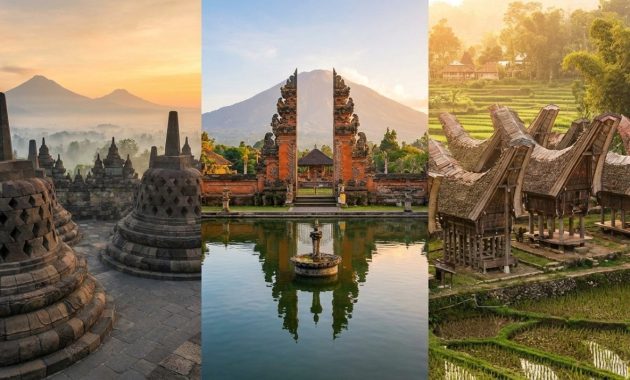
Discovering the Soul of Indonesia Through Culture
Indonesia is more than beaches and volcanoes. At its heart, the country is a tapestry of living traditions, sacred architecture, and royal legacies shaped by centuries of Hindu, Buddhist, Islamic, and indigenous influences. From mist-covered temple complexes and still-inhabited palaces to remote villages preserving ancestral ways of life, Indonesia culture travel offers travelers a deeply human connection to the archipelago.
Unlike museum-only destinations, Indonesia’s cultural sites are alive. Prayers echo through temple courtyards, palace ceremonies continue as they have for generations, and village traditions are woven into daily routines. This guide explores the most meaningful cultural destinations in Indonesia, focusing on temples, palaces, and villages that define the nation’s identity.
Ancient Temples of Indonesia: Sacred Architecture Across Civilizations
Borobudur Temple (Central Java)
Borobudur is the largest Buddhist temple in the world and Indonesia’s most iconic cultural landmark. Built in the 9th century, the temple represents a three-dimensional mandala, guiding pilgrims from the earthly realm to enlightenment.
Visiting Borobudur at sunrise is a profound cultural experience. As mist lifts from the surrounding jungle and volcanoes, visitors witness Buddhism expressed through thousands of carved reliefs depicting moral lessons, daily life, and spiritual journeys.
Why visit:
Borobudur is essential for understanding Indonesia’s pre-Islamic history and its role in global Buddhist heritage.
Prambanan Temple (Central Java)
Prambanan is the largest Hindu temple complex in Indonesia, dedicated to Shiva, Vishnu, and Brahma. Its soaring spires and intricate stone carvings contrast sharply with Borobudur’s rounded stupas.
The Ramayana ballet performances held near the temple bring ancient epics to life through dance, music, and storytelling.
Why visit:
Prambanan showcases Hindu influence in Indonesia and blends architecture with living performance traditions.
Besakih Temple (Bali)
Known as the “Mother Temple of Bali,” Besakih sits on the slopes of Mount Agung and is the most important Hindu complex on the island.
Rather than a single structure, Besakih is a network of temples serving different clans and ceremonial purposes.
Why visit:
This is the spiritual center of Balinese Hinduism and a key stop for Indonesia culture travel focused on religion and ritual.
Royal Palaces: Living Symbols of Power and Tradition
Kraton Yogyakarta (Java)
The Kraton of Yogyakarta is not just a historical palace—it remains the residence of the Sultan and the heart of Javanese culture.
Visitors can observe court dances, gamelan music, and royal traditions still practiced today.
Why visit:
The Kraton represents living monarchy and refined Javanese philosophy centered on harmony and balance.
Pura Mangkunegaran & Keraton Surakarta (Solo)
Solo (Surakarta) is often considered more traditionally Javanese than Yogyakarta. Its palaces preserve classical court etiquette, batik traditions, and ceremonial arts.
Why visit:
Ideal for travelers seeking a quieter, deeper cultural immersion away from crowds.
Istana Maimun (Medan, Sumatra)
This Malay royal palace blends Islamic, European, and local architectural styles, reflecting Sumatra’s multicultural history.
Why visit:
It highlights the diversity of Indonesian royal traditions beyond Java and Bali.
Traditional Villages: Preserving Indonesia’s Living Heritage
Tana Toraja (South Sulawesi)
Tana Toraja is one of Indonesia’s most culturally distinctive regions, known for its elaborate funeral ceremonies and tongkonan houses with boat-shaped roofs.
Death rituals here are not private events but community gatherings that can last for days.
Why visit:
For travelers interested in anthropology and ritual traditions unlike anywhere else in the world.
Wae Rebo Village (Flores)
Hidden in the mountains of Flores, Wae Rebo is famous for its cone-shaped traditional houses and strong communal values.
Reaching the village requires a trek, adding to the sense of cultural pilgrimage.
Why visit:
A powerful example of sustainable living and preserved indigenous culture.
Baduy Village (Banten, Java)
The Baduy people live without modern technology, maintaining strict customs that reject electricity, vehicles, and formal education.
Why visit:
This destination challenges modern travel norms and offers insight into cultural preservation through isolation.
Penglipuran Village (Bali)
One of the cleanest villages in the world, Penglipuran showcases traditional Balinese layout, architecture, and community rules.
Why visit:
An accessible introduction to Balinese village life rooted in adat (customary law).
Cultural Etiquette Tips for Indonesia Culture Travel
- Dress modestly at temples and villages
- Always ask before photographing people or ceremonies
- Use your right hand for giving and receiving
- Respect sacred spaces and local restrictions
- Learn a few basic Indonesian phrases—it goes a long way
Best Time to Visit Cultural Destinations in Indonesia
- Dry season: May to October (best for temple and village visits)
- Festival periods: Nyepi (Bali), Waisak (Borobudur), royal ceremonies in Java
- Avoid: Major religious holidays if you dislike crowds, unless festivals are your goal
FAQs About Indonesia Culture Travel
Is Indonesia good for cultural tourism?
Yes, Indonesia is one of Asia’s richest cultural destinations, with living traditions across thousands of islands.
Which island is best for cultural travel?
Java and Bali are the most accessible, while Sulawesi and Flores offer deeper cultural immersion.
Can tourists visit traditional villages respectfully?
Yes, as long as visitors follow local rules and show cultural sensitivity.
Are temples still active religious sites?
Many are, especially in Bali and Java, so respectful behavior is essential.
How many cultural destinations should I include in an Indonesia trip?
Ideally, focus on 2–3 regions to avoid rushing. Java and Bali work well together, while Sulawesi or Flores are better as dedicated cultural trips.
Is it respectful to watch religious ceremonies in Indonesia?
Yes, most ceremonies welcome observers, but visitors must dress modestly, stay quiet, and follow instructions from locals.
Do I need a guide to visit cultural sites in Indonesia?
A guide is not required but highly recommended for temples, royal palaces, and traditional villages to understand symbolism and etiquette.
Are Indonesia’s cultural villages safe for tourists?
Yes, most villages are very safe. However, visitors should respect local customs, ask permission before entering homes, and follow community rules.
What should I wear when visiting temples in Indonesia?
Shoulders and knees should be covered. Sarongs are often required and usually provided at major temples.
Can tourists participate in traditional ceremonies?
In some areas, yes—especially village festivals and Balinese ceremonies—if invited and properly dressed.
Which Indonesian temples are still actively used for worship?
Besakih (Bali), Prambanan (Java), and many local village temples remain active religious sites.
Is cultural tourism expensive in Indonesia?
Most cultural attractions are affordable, with entrance fees ranging from low to moderate, especially compared to Western destinations.
Are there cultural restrictions on photography in Indonesia?
Yes. Photography may be prohibited during certain rituals or inside sacred spaces. Always ask first.
How can travelers avoid being culturally insensitive?
Learn basic etiquette, observe locals before acting, and avoid loud behavior at sacred sites.
Which Indonesian cultural destination is best for first-time visitors?
Yogyakarta is ideal, offering temples, palaces, batik workshops, and traditional performances in one city.
Are cultural sites crowded during peak season?
Popular temples like Borobudur and Prambanan can be crowded during holidays and festivals, especially June–August.
Can children visit cultural destinations in Indonesia?
Yes, many sites are family-friendly, especially palaces, village tours, and cultural museums.
What language is spoken at cultural sites?
Indonesian (Bahasa Indonesia) is the main language, though local dialects are common. English is spoken at major attractions.
Is cultural travel in Indonesia suitable for solo travelers?
Very much so. Cultural regions like Java and Bali are safe and welcoming for solo travelers.
How long should I spend at a major cultural site?
Plan at least 2–3 hours for large temples or palaces, and half a day for village visits.
What souvenirs are culturally appropriate to buy?
Handmade batik, wood carvings, traditional textiles, and local crafts are respectful and support local communities.
Do cultural sites close during religious holidays?
Some may close temporarily or restrict access, especially during Nyepi (Bali’s Day of Silence).
Final Verdict: Why Cultural Travel Defines Indonesia
Indonesia culture travel goes beyond sightseeing. It invites travelers to witness traditions that are still practiced, not staged. From monumental temples and royal courts to villages untouched by time, Indonesia offers one of the most authentic cultural journeys in the world.
For travelers seeking meaning, history, and human connection, Indonesia’s cultural destinations are not optional—they are essential.