When Penang’s Walls Began to Speak
In Penang, art doesn’t live in galleries — it lives on walls. What started as a creative experiment has transformed George Town into one of Asia’s most vibrant open-air art galleries. This Penang Street Art Guide invites you to wander through time, color, and emotion as every mural, sculpture, and sketch tells a story about the island’s soul.
From Ernest Zacharevic’s “Little Children on a Bicycle” to hidden masterpieces tucked between coffee shops and clan houses, Penang’s murals breathe life into its colonial charm. Whether you’re an art enthusiast, a photographer, or simply a curious traveler, this is one Penang experience you’ll never forget.
The Birth of Penang’s Street Art Movement
Penang’s street art revolution began in 2012, when Lithuanian artist Ernest Zacharevic was commissioned to create wall murals for the George Town Festival. His playful, human-centered pieces soon became viral, turning quiet alleys into must-visit landmarks.
Following his success, local and international artists joined the movement, painting stories that reflect Penang’s multicultural identity — from nostalgic memories to modern urban humor. Today, street art isn’t just decoration here; it’s Penang’s visual dialogue between past and present.
Top Street Art Murals You Must See in George Town
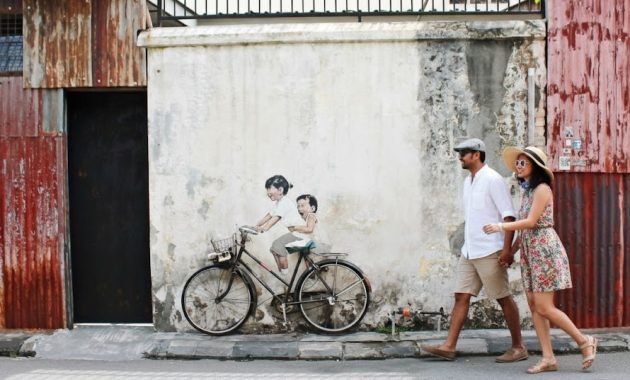
1. Little Children on a Bicycle (Armenian Street)
The most famous mural in Penang, painted by Zacharevic. It shows two kids joyfully riding a real bicycle fixed to the wall. It perfectly captures the carefree spirit of local childhood.
Tip: Come early morning to avoid crowds and get the perfect shot.
2. Boy on a Motorcycle (Ah Quee Street)
Another iconic Zacharevic creation — a young boy leaning on a real motorcycle, waiting in thought. The mural’s depth and lifelike detail make it an Instagram favorite.
3. Reaching Up (Cannon Street)
Depicts a young boy stretching to reach a hole high up the wall — symbolizing the dreams and aspirations of Penang’s youth.
4. The Awaiting Trishaw Peddler (Penang Road)
This large, emotional mural shows an elderly trishaw rider resting. It’s a tribute to Penang’s hardworking locals and fading traditions.
5. Brother and Sister on Swing (Step by Step Lane, Chulia Street Ghaut)
A cheerful mural featuring two children playing on swings, incorporating real metal structures into the design — a signature Penang street art feature.
6. Old Soy Milk Stall (Makulit Lane)
A nostalgic depiction of a street vendor selling soy milk. The colors and details evoke memories of old Penang’s charm.
7. I Want Bao (Nagore Square)
One of the newer additions, this cute mural of a little boy with a steamed bun has become a crowd favorite for food lovers.
Hidden Street Art Gems Beyond Armenian Street
While Armenian Street is the heart of Penang’s mural scene, the real thrill lies in finding hidden gems scattered throughout George Town.
- Hin Bus Depot: A creative space featuring ever-changing contemporary art, graffiti, and weekend art markets.
- Muntri Street: Home to quirky murals and boutique hotels that blend heritage with art.
- Stewart Lane & Love Lane: Known for whimsical, romantic art pieces that pair well with Penang’s vintage architecture.
- Nagore Road: A quieter area where newer artists experiment with abstract and multicultural themes.
Pro Tip: Download a “Penang Street Art Map” or join a walking tour — though half the fun is stumbling upon new art unexpectedly!
Steel Rod Sculptures: Penang’s Comic Steel Art
In addition to colorful murals, you’ll also find 52 steel rod caricatures scattered across George Town. These were introduced under the “Marking George Town” project, narrating the city’s history and local humor.
Each piece humorously depicts Penang’s past — from colonial trade stories to everyday local life. Some highlights include:
- “Too Narrow” (Lim Chwee Leong Road) — A trishaw driver struggles to fit through a narrow lane.
- “Kopi-O” (Weld Quay) — A playful take on Penang’s coffee culture.
- “Cheating Husband” (Love Lane) — A cheeky nod to the street’s name and its romantic past.
These sculptures add another creative dimension to Penang’s artistic storytelling.
Art Cafés & Galleries Worth Visiting
If you want to take your street art exploration indoors, Penang has plenty of creative cafés and galleries:
- ChinaHouse: A massive artsy café-gallery space with live music, desserts, and rotating exhibits.
- The Camera Museum: Combines photography history with interactive art experiences.
- Hin Bus Depot Art Space: The hub of Penang’s modern art scene.
- Art Lane Penang: A community project featuring murals by local students and artists-in-residence.
Each spot offers a cozy, inspiring pause between mural hunting.
Best Routes for a Self-Guided Street Art Tour
Route 1: The Classic Trail (Armenian–Cannon–Ah Quee Streets)
Start at Armenian Street (Little Children on a Bicycle) → Cannon Street (Reaching Up) → Ah Quee Street (Boy on a Motorcycle). Perfect for first-timers.
Route 2: The Hidden Trail (Love Lane–Stewart Lane–Muntri Street)
Explore quieter alleys with lesser-known but equally beautiful murals. Great for photographers and those seeking offbeat vibes.
Route 3: The Modern Trail (Hin Bus Depot–Nagore Road–Gat Lebuh Chulia)
See Penang’s evolving art scene, with new murals and sculptures representing contemporary Malaysian identity.
Tips for Exploring Penang’s Street Art
- Go early morning or late afternoon to avoid heat and crowds.
- Bring water, sunscreen, and comfortable shoes.
- Be respectful — avoid touching or climbing on art.
- Stay alert for new pieces — Penang’s murals change regularly.
- Hire a local guide if you want to understand the deeper cultural meanings behind each artwork.
Street Art Festivals in Penang
- George Town Festival (August): A month-long celebration of art, music, film, and performance. Many new murals and installations debut here.
- Urban Xchange Street Art Festival: Brings international street artists to collaborate with local talents.
- Art@Whiteaways: Showcases exhibitions and creative installations throughout George Town.
Where to Stay Near Street Art Hotspots
Staying in George Town keeps you close to all the murals, cafés, and galleries.
Budget:
- The Frame Guesthouse
- The 80s Guesthouse
Mid-Range:
- Spices Hotel
- Areca Hotel Penang
Luxury:
- The Edison George Town
- Cheong Fatt Tze Mansion (The Blue Mansion)
All are within walking distance from Penang’s main street art zones.
FAQs About Penang Street Art Guide
Where is the best place to see Penang street art?
Armenian Street in George Town is the most famous spot.
Who is the artist behind Penang’s murals?
Ernest Zacharevic started the movement, but many local artists have added their own works since.
Is the street art in Penang free to see?
Yes, all murals are free and open to the public.
How do I find hidden murals in Penang?
Use a Penang street art map or explore lesser-known streets like Muntri or Love Lane.
How long does it take to explore?
2–3 hours on foot is enough to see most murals.
Are the Penang murals maintained regularly?
Some older ones have faded, but new art pops up every year.
Can I take photos on the murals?
Absolutely — just be respectful of residents and businesses nearby.
Are there guided tours in George Town?
Yes, walking and cycling tours are available daily in George Town.
What’s unique about the steel rod sculptures?
They humorously depict Penang’s history in cartoon-like metal form.
What time of day is best for photos?
Early morning or golden hour gives the best lighting.
Is street art spread across the island?
Mostly concentrated in George Town, but some can be found in Air Itam and Batu Ferringhi.
Can I buy prints of the murals?
Yes, many souvenir shops sell postcards and art prints of famous murals.
Final Verdict: Penang — Where Every Wall Tells a Story
Penang’s street art isn’t just about pretty walls — it’s a living, breathing canvas that mirrors the island’s soul. Each mural reflects nostalgia, humor, and cultural harmony, creating a bridge between locals and visitors.
For first-time travelers, this Penang Street Art Guide is your map to the island’s creative pulse. Whether you’re snapping photos of Zacharevic’s classics or discovering a new piece tucked in a back alley, every corner of George Town reminds you that art — much like Penang itself — is ever-evolving, vibrant, and full of life.