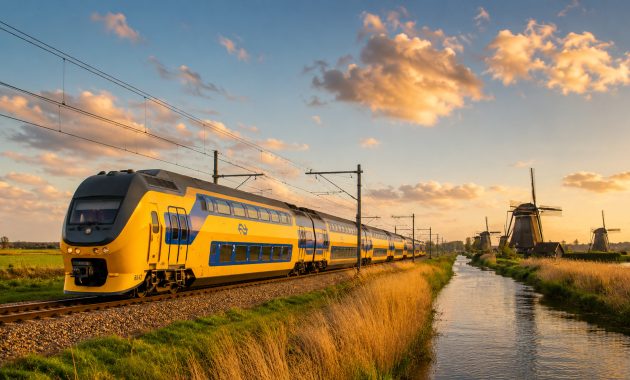
The first time I traveled across the Netherlands, I was amazed by how simple the railway system was. Within minutes of arriving at Amsterdam Centraal station, I had purchased a ticket, boarded a modern train, and was on my way to Utrecht.
No airport-style security lines, no complicated reservations, and no long waits—just frequent departures and comfortable trains connecting nearly every corner of the country.
The Dutch railway network is one of Europe’s most efficient, making it the preferred way to travel for both locals and visitors. Whether you’re planning a short city break or a multi-city itinerary, understanding Netherlands train travel will help you save time, reduce transportation costs, and enjoy a smoother journey.
This comprehensive guide explains everything tourists need to know about traveling on Nederlandse Spoorwegen (NS) trains, including ticket options, train types, fares, classes, luggage rules, accessibility, station facilities, and practical travel tips.
Why Choose Train Travel in the Netherlands?
The Netherlands is relatively small, which makes rail travel incredibly efficient.
Instead of spending hours driving or dealing with expensive parking, travelers can comfortably reach most major cities within one to two hours.
Benefits of Netherlands Train Travel
- Extensive nationwide rail network
- Frequent departures throughout the day
- Comfortable and modern trains
- City-center to city-center travel
- No baggage fees
- Environmentally friendly
- Excellent connections with local transport
For most visitors, trains are faster and more convenient than renting a car.
Meet NS (Nederlandse Spoorwegen)
Nederlandse Spoorwegen, commonly known as NS, is the country’s primary passenger railway operator.
The company serves:
- Major cities
- Regional towns
- International rail connections
- Airports
- Tourist destinations
Most domestic routes are operated by NS, while some regional lines are managed by other rail companies using the same integrated ticketing system.
Understanding the Dutch Rail Network
The Dutch rail system connects nearly every part of the country.
Popular destinations include:
- Amsterdam
- Rotterdam
- The Hague
- Utrecht
- Eindhoven
- Haarlem
- Delft
- Leiden
- Groningen
- Maastricht
Most stations are located within walking distance of historic city centers.
Types of NS Trains
Understanding the different train categories makes planning your trip much easier.
Intercity (IC)
Intercity trains connect major cities with limited stops.
Ideal for:
- Long-distance travel
- Business trips
- Tourists visiting multiple cities
Features include:
- Faster journeys
- Comfortable seating
- Wi-Fi on many trains
- Quiet carriages on selected services
Sprinter
Sprinter trains stop at almost every station along a route.
Best for:
- Small towns
- Local travel
- Connecting to rural destinations
Although slower than Intercity services, they provide excellent regional coverage.
International Trains
The Netherlands is also connected to neighboring countries by high-speed and international rail services.
Popular international routes include:
- Amsterdam – Brussels
- Amsterdam – Paris
- Amsterdam – Berlin
- Amsterdam – London
Some international services require advance reservations and have different fare structures from domestic NS trains.
Popular Train Routes for Tourists
| Route | Average Travel Time |
|---|---|
| Amsterdam – Utrecht | 25–30 minutes |
| Amsterdam – Rotterdam | 40–50 minutes |
| Amsterdam – The Hague | 50–60 minutes |
| Amsterdam – Haarlem | 15–20 minutes |
| Amsterdam – Leiden | 35–40 minutes |
| Rotterdam – Delft | 15 minutes |
| Rotterdam – Eindhoven | 1 hour 10 minutes |
| Utrecht – Eindhoven | 50 minutes |
| Amsterdam – Maastricht | 2 hours 20 minutes |
| Amsterdam – Groningen | 2 hours 10 minutes |
These travel times make day trips between cities both practical and enjoyable.
Train Classes
Domestic NS trains generally offer two travel classes.
First Class
First Class provides:
- More spacious seating
- Quieter environment
- Less crowded carriages
- Comfortable workspaces
Suitable for:
- Business travelers
- Long journeys
- Travelers seeking extra comfort
Second Class
Most tourists choose Second Class because it offers excellent value.
Benefits include:
- Comfortable seats
- Free Wi-Fi on many routes
- Charging points on newer trains
- Plenty of luggage space
The difference in comfort between the two classes is relatively modest for shorter trips.
Buying Train Tickets
Purchasing train tickets is straightforward.
You can buy tickets through:
- NS ticket machines
- Station ticket offices (where available)
- The official NS mobile app
- Online before departure
For most domestic routes, advance reservations are not required, allowing flexibility if your plans change.
Using OVpay for Contactless Travel
One of the easiest ways for visitors to use Netherlands train travel is with OVpay.
Instead of buying individual tickets, eligible travelers can use:
- Contactless debit cards
- Contactless credit cards
- Smartphones with supported digital wallets
- Smartwatches with contactless payment
Simply tap your card or device at the gate or card reader when entering and exiting the station.
Advantages of OVpay
- No paper ticket needed
- No transport card purchase required
- Ideal for short visits
- Easy fare calculation
Remember to use the same payment method for both check-in and check-out.
Using the OV-chipkaart
For longer stays, the OV-chipkaart remains a practical option.
It works across:
- NS trains
- Trams
- Metro
- Buses
- Many regional transport operators
Types of OV-chipkaart
Anonymous Card
Ideal for tourists spending several days or weeks in the Netherlands.
Personal Card
Available primarily for Dutch residents and long-term users.
Disposable Cards
Useful for occasional travel but generally less flexible than reusable options.
Understanding Check-In and Check-Out
Unlike many countries where tickets are inspected only on board, the Dutch rail system requires passengers to check in before boarding and check out after arriving.
How It Works
- Tap your card or ticket at the station gate or validator.
- Board your train.
- Exit at your destination.
- Tap again to complete your journey.
Failing to check out may result in an incomplete journey and a higher charge.
Ticket Prices
Domestic train fares are based primarily on distance traveled rather than demand.
Approximate one-way fares:
| Route | Typical Fare |
|---|---|
| Amsterdam – Haarlem | €5–€6 |
| Amsterdam – Utrecht | €9–€11 |
| Amsterdam – Rotterdam | €18–€21 |
| Amsterdam – The Hague | €16–€18 |
| Utrecht – Eindhoven | €18–€20 |
Children, seniors, and frequent travelers may qualify for discounts under certain ticket products.
Can You Reserve Seats?
For domestic NS trains:
Seat reservations are generally not required and are not available.
Passengers simply board and choose any available seat in their ticketed class.
Reservations are usually only necessary for certain international trains.
Luggage Allowance
One of the biggest advantages of Dutch rail travel is its generous luggage policy.
Passengers can usually bring:
- Suitcases
- Backpacks
- Cabin bags
- Strollers
- Sports equipment (subject to conditions)
There are no airline-style baggage fees for normal personal luggage.
Tips
- Keep aisles clear.
- Store large suitcases in designated luggage areas.
- Keep valuables with you at all times.
Bringing a Bicycle on the Train
Cycling and rail travel complement each other perfectly in the Netherlands.
Regular bicycles are permitted on many trains outside weekday peak hours, usually with a separate bicycle ticket.
Folding bicycles can typically be carried free of charge when folded.
Always check restrictions before traveling, particularly during busy commuter periods.
Traveling with Children
Families will find Dutch trains easy to use.
Many services include:
- Space for strollers
- Family seating areas
- Accessible toilets on longer routes
- Easy station access
Children under certain ages may qualify for discounted travel depending on the ticket type.
Accessibility
NS places a strong emphasis on accessibility.
Many stations provide:
- Elevators
- Escalators
- Ramps
- Tactile guidance paths
- Accessible toilets
- Audio and visual announcements
Travel assistance can often be arranged in advance for passengers with reduced mobility.
Onboard Facilities
Modern NS trains commonly include:
- Free Wi-Fi
- Power outlets on many newer trains
- Digital information displays
- Air conditioning
- Clean restrooms on most Intercity services
- Quiet zones for passengers seeking a peaceful journey
Facilities vary depending on the train model and route.
Major Railway Stations
Amsterdam Centraal
The country’s busiest railway station and the main gateway for international visitors.
Nearby attractions include:
- Dam Square
- Canal cruises
- Jordaan
- Anne Frank House
Utrecht Centraal
The largest railway hub in the Netherlands.
Nearly every major route passes through Utrecht, making it an excellent transfer point.
Rotterdam Centraal
A striking modern station known for its architecture and excellent connections to domestic and international destinations.
Schiphol Airport Station
Located directly beneath Amsterdam Airport Schiphol, this station allows travelers to transfer seamlessly between flights and trains without leaving the airport terminal.
Best Scenic Train Journeys
While the Netherlands isn’t famous for mountain railways, several routes offer beautiful scenery.
Highlights include:
- Amsterdam to Haarlem (historic towns and countryside)
- Haarlem to Leiden (spring flower fields during tulip season)
- Rotterdam to Dordrecht (rivers and wetlands)
- Zwolle to Groningen (open farmland)
- Maastricht to Heerlen (rolling hills in the south)
Traveling in April provides spectacular views of colorful tulip fields in the flower-growing regions.
Money-Saving Tips for Train Travel
Travel Outside Peak Hours
Off-peak travel is generally quieter and may qualify for discounted fares under certain ticket products.
Combine Cities in One Trip
Because journeys are short, you can easily visit multiple destinations without paying for overnight accommodation in every city.
Use Contactless Payment
OVpay simplifies travel for many visitors and eliminates the need to purchase separate transport cards for shorter trips.
Book International Trains Early
If you’re traveling to Paris, London, Brussels, or Berlin, booking several weeks in advance often results in significantly lower fares.
Stay Near Railway Stations
Hotels close to major stations make it easier to maximize sightseeing time and reduce local transport costs.
Common Mistakes First-Time Visitors Make
Avoid these frequent errors:
- Forgetting to check out after arriving.
- Boarding First Class with a Second Class ticket.
- Traveling during peak commuter hours with large luggage.
- Standing near train doors instead of moving into the carriage.
- Assuming seat reservations are required for domestic journeys.
A little preparation will help your trip go smoothly.
Suggested Rail Itinerary for First-Time Visitors
Day 1–3: Amsterdam
Explore museums, canals, and neighborhoods using trams and walking.
Day 4: Haarlem
A short train ride takes you to one of the Netherlands’ most charming historic cities.
Day 5: Utrecht
Discover medieval canals, Dom Tower, and lively cafés.
Day 6: Rotterdam
Experience modern architecture, Markthal, and the Erasmus Bridge.
Day 7: The Hague
Visit museums before relaxing at Scheveningen Beach, all easily reached by train and tram.
FAQs – Netherlands Train Travel
Is train travel the best way to explore the Netherlands?
Yes. For most visitors, trains are the fastest, easiest, and most reliable way to travel between cities.
Do I need to reserve seats?
No, domestic NS trains generally do not require or offer seat reservations.
Can tourists use contactless bank cards?
Yes. OVpay allows eligible travelers to use contactless cards and mobile wallets on many rail services.
What happens if I forget to check out?
You may be charged an incorrect or incomplete fare, so always remember to tap out at the end of your journey.
Is Wi-Fi available?
Many Intercity and newer NS trains provide free Wi-Fi.
Can I bring luggage?
Yes. Standard luggage is included without additional fees.
Are trains accessible?
Most stations and trains are accessible, with facilities for passengers with reduced mobility.
Can I bring a bicycle?
Yes, subject to time restrictions and, for regular bicycles, the purchase of a bicycle ticket.
Is First Class worth it?
For short domestic journeys, Second Class is comfortable enough for most travelers. First Class may be worthwhile if you value extra space and a quieter environment.
Are Dutch trains punctual?
Generally, yes. The Dutch rail network is known for its reliability and frequent departures.
Can I travel directly from Schiphol Airport by train?
Yes. Schiphol Airport has its own railway station beneath the terminal, offering direct services to many Dutch cities.
Is a rental car necessary?
For most tourists, no. The rail network provides excellent coverage of major destinations, making a car unnecessary for typical itineraries.
Final Verdict: Why Choose Netherlands Train Travel?
For visitors exploring the country, Netherlands train travel offers one of the most efficient and enjoyable railway experiences in Europe. Frequent departures, modern trains, integrated ticketing, and direct city-center connections make it easy to travel from Amsterdam’s canals to Rotterdam’s skyline, Utrecht’s medieval streets, or Maastricht’s charming old town—all without the stress of driving.
Whether you’re spending a weekend discovering a single city or embarking on a two-week journey across the Netherlands, NS trains provide a comfortable, reliable, and environmentally friendly way to experience the country’s diverse landscapes, historic towns, and vibrant urban centers.