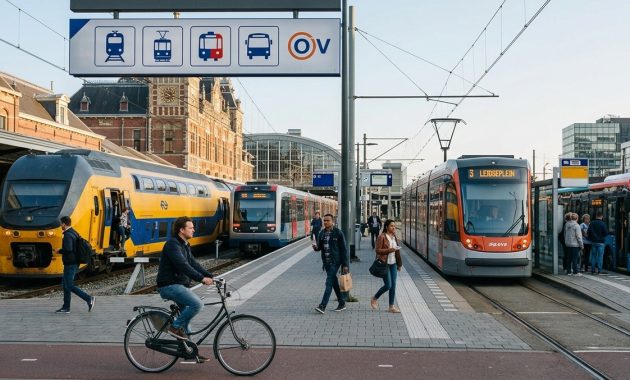
One of the first things I noticed after arriving in the Netherlands was how incredibly easy it was to get around.
Within just a few hours, I had traveled from Amsterdam to Rotterdam, hopped on a tram to my hotel, rented a bicycle, and later caught a ferry across the river—all without needing a car.
The Netherlands has one of Europe’s most efficient transportation systems. Fast intercity trains, extensive regional buses, modern tram networks, metro systems, ferries, and world-famous cycling infrastructure make traveling between cities and attractions remarkably convenient.
Whether you’re planning a weekend city break or a two-week road trip across the country, this comprehensive Netherlands transportation guide covers everything you need to know.
Overview of Transportation in the Netherlands
Traveling around the Netherlands is straightforward thanks to its integrated public transport network.
Your main transportation options include:
- Intercity and regional trains
- Trams
- Metro systems
- Regional and local buses
- Bicycle rentals
- Ferries
- Taxis
- Rental cars
Because the country is relatively compact, you can travel between most major cities in under two hours.
Traveling by Train
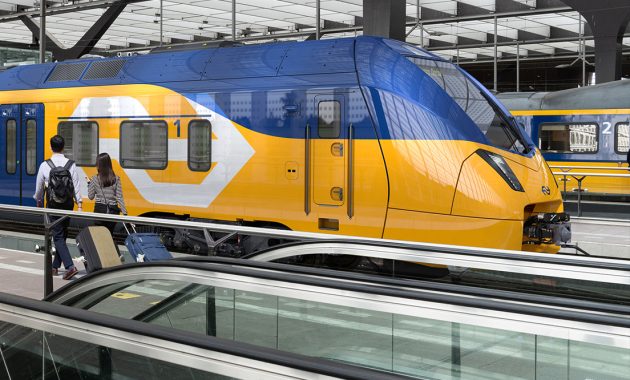
For most visitors, trains are the fastest and most convenient way to explore the country.
The national railway operator is Nederlandse Spoorwegen (NS), which connects nearly every major city and many smaller towns.
Why Choose the Train?
Advantages include:
- Fast travel times
- Frequent departures
- Comfortable seating
- Free Wi-Fi on many services
- No need to worry about parking
- Excellent punctuality
Most stations are located in city centers, making sightseeing easy without additional transportation.
Major Train Routes
| Route | Approximate Travel Time |
|---|---|
| Amsterdam – Utrecht | 25–30 minutes |
| Amsterdam – Rotterdam | 40–50 minutes |
| Amsterdam – The Hague | 50–60 minutes |
| Amsterdam – Haarlem | 15–20 minutes |
| Rotterdam – Delft | 15 minutes |
| Rotterdam – Utrecht | 35–40 minutes |
| Utrecht – Eindhoven | 50 minutes |
High-frequency departures mean you rarely need to wait long.
Types of Trains
Intercity (IC)
Intercity trains are the fastest option for traveling between major cities.
Ideal for:
- Tourists
- Business travelers
- Long-distance travel
They stop only at larger stations.
Sprinter
Sprinter trains stop at nearly every station.
Best for:
- Smaller towns
- Local sightseeing
- Day trips
Buying Train Tickets
Visitors can purchase tickets through:
- NS ticket machines
- Mobile apps
- Railway station counters
- Contactless payment at station gates where available
Digital tickets are becoming increasingly popular and eliminate the need for paper tickets.
OVpay and Contactless Travel
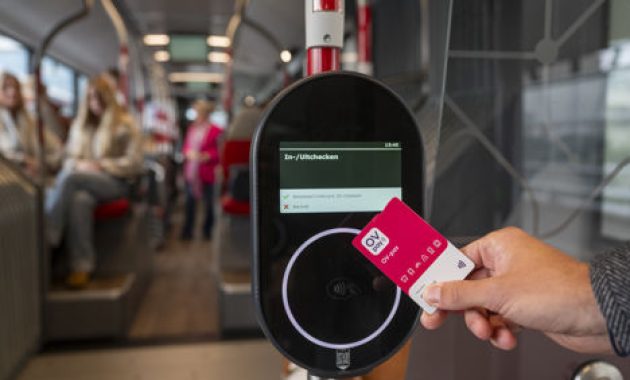
One of the easiest ways to use Netherlands transportation is through OVpay, which allows travelers to check in and out of many public transport services using a contactless bank card, credit card, or compatible mobile wallet.
Benefits include:
- No separate transport card required for many journeys
- Easy tap-in and tap-out on participating transport
- Convenient for short-term visitors
Always remember to tap both when entering and leaving your journey to ensure the correct fare is charged.
Using the OV-chipkaart
Although many visitors now use contactless payments, the OV-chipkaart remains a useful option for longer stays or frequent public transport use.
The card can be used on:
- Trains
- Trams
- Metro
- Buses
There are three main types:
Anonymous OV-chipkaart
Suitable for tourists staying several days or weeks.
Personal OV-chipkaart
Designed mainly for Dutch residents.
Disposable Tickets
Available for certain routes and short journeys.
Tram Networks
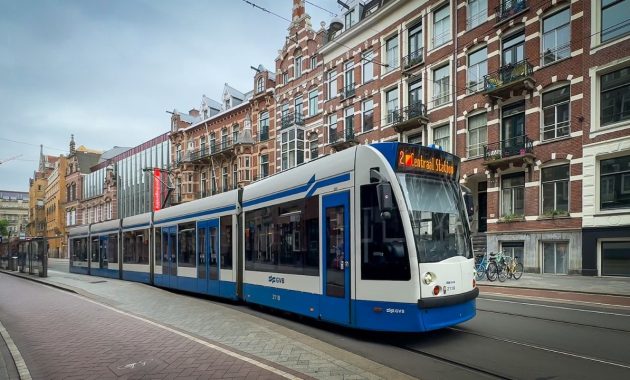
Trams are one of the easiest ways to explore Dutch cities.
Major tram systems operate in:
- Amsterdam
- Rotterdam
- The Hague
- Utrecht (limited network)
Trams are:
- Frequent
- Clean
- Accessible
- Easy to navigate
Riding Amsterdam’s Trams
Amsterdam’s tram network reaches many major attractions, including:
- Rijksmuseum
- Van Gogh Museum
- Dam Square
- Jordaan
For most tourists, trams are faster than driving through the historic center.
Metro Systems
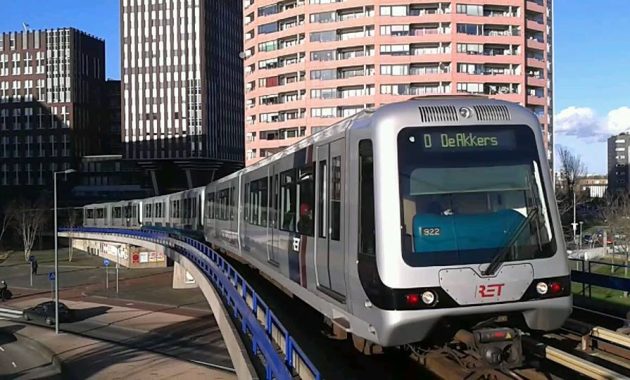
Metro networks operate primarily in:
- Amsterdam
- Rotterdam
Rotterdam’s metro extends beyond the city center, making it useful for suburban exploration.
Metro services are particularly valuable for:
- Airport connections
- Business districts
- Residential neighborhoods
- Late-evening travel
Traveling by Bus
Buses complement train services by reaching destinations without railway stations.
Regional buses serve:
- Small villages
- National parks
- Coastal towns
- Rural attractions
Long-distance coaches are generally unnecessary because trains cover most intercity routes efficiently.
Airport Transportation
Most international travelers arrive at Amsterdam Airport Schiphol.
Fortunately, reaching the city is simple.
Train
The fastest option.
Travel time to Amsterdam Central:
Approximately 15–20 minutes.
Trains depart frequently throughout the day.
Bus
Airport buses connect Schiphol with numerous nearby cities and neighborhoods.
Useful if your accommodation isn’t near a train station.
Taxi
Taxis are available outside airport terminals.
Although convenient, they are considerably more expensive than trains.
Cycling Around the Netherlands
No guide to Netherlands transportation would be complete without discussing bicycles.
The Netherlands is often regarded as the cycling capital of the world.
Why Cycling Is So Popular
Advantages include:
- Dedicated bicycle lanes
- Flat terrain
- Safe infrastructure
- Affordable rentals
- Scenic routes
Many cities have more bicycles than residents.
Renting a Bicycle
Rental shops are available in nearly every tourist destination.
Typical daily rental prices:
| Bicycle Type | Average Cost |
|---|---|
| Standard Bike | €12–€20 |
| Electric Bike | €25–€45 |
| Tandem Bike | €30–€50 |
Many hotels also provide bicycle rentals.
Essential Cycling Rules
Before renting a bicycle, remember:
- Ride in designated bike lanes.
- Obey traffic lights.
- Signal before turning.
- Use lights after dark.
- Avoid using your phone while cycling.
- Lock your bike securely whenever you leave it.
Cyclists generally have priority in many areas, so pedestrians should avoid walking in bike lanes.
Ferries
Several cities operate passenger ferries.
The best-known services are the free ferries behind Amsterdam Centraal station, connecting the city center with Amsterdam North.
Ferries are popular with:
- Cyclists
- Commuters
- Tourists
Some ferry routes also carry bicycles at no extra charge.
Rental Cars
Although renting a car is possible, many travelers discover they simply don’t need one.
Advantages
- Flexible countryside exploration
- Easy access to rural areas
- Convenient for road trips
Disadvantages
- Expensive parking
- Heavy city traffic
- Excellent public transport already available
A rental car is most useful when visiting smaller villages, national parks, or multiple rural destinations in one trip.
Taxis & Ride-Hailing
Licensed taxis operate in all major Dutch cities.
They can be:
- Hailed at taxi stands
- Booked by phone
- Reserved through local taxi apps
Ride-hailing services are also available in many urban areas, offering an alternative to traditional taxis.
Because public transport is so efficient, taxis are often reserved for airport transfers or late-night travel.
Accessibility for Travelers
The Netherlands is one of Europe’s most accessible countries.
Many stations and vehicles offer:
- Elevators
- Escalators
- Step-free boarding
- Wheelchair-accessible buses
- Audio announcements
- Visual information displays
Travelers with reduced mobility should still check accessibility details for older stations and historic neighborhoods.
Transport Passes Worth Considering
Depending on your itinerary, you may save money with transport passes.
Amsterdam Travel Ticket
Ideal for visitors staying in Amsterdam and using public transportation extensively.
Often includes:
- Trams
- Metro
- Buses
- Airport train or bus connections (depending on ticket type)
Holland Travel Ticket
Suitable for travelers visiting multiple cities in one day.
Provides flexible travel across much of the Dutch public transport network during its validity.
Museumkaart
While not a transport pass, travelers visiting many museums can combine it with public transportation to maximize savings on sightseeing.
Sample Transportation Costs
| Transportation | Typical Cost |
|---|---|
| Amsterdam Tram Ride | €3–€4 |
| Amsterdam–Rotterdam Train | €18–€25 |
| Bicycle Rental | €12–€20/day |
| Airport Train | €5–€7 |
| Metro Ride | €3–€4 |
| Taxi Airport to City Center | €45–€60 |
Prices vary depending on distance, ticket type, and operator.
Best Transportation for Different Travelers
| Traveler | Recommended Option |
|---|---|
| First-Time Visitors | Trains + Trams |
| Families | Trains + Buses |
| Budget Travelers | Bicycles + Trains |
| Couples | Trains + Walking |
| Photographers | Bicycle + Ferries |
| Nature Lovers | Rental Car or Regional Buses |
Practical Transportation Tips
Download Useful Apps
Before your trip, consider downloading:
- The NS app for train schedules and tickets.
- Local public transport apps for city routes.
- Navigation apps with cycling directions.
These apps provide real-time departure information and platform updates.
Avoid Rush Hour
Weekday mornings (around 7:00–9:00) and evenings (around 4:30–6:30) can be crowded, particularly on commuter routes.
If your schedule is flexible, traveling outside these periods offers a more comfortable experience.
Validate Your Journey
Whether you’re using an OV-chipkaart or contactless payment, always remember to check in at the start of your journey and check out at the end. Missing a tap-out may result in an incorrect fare or a default charge.
Travel Light
Many stations have elevators and escalators, but you’ll still encounter stairs in some older stations and historic areas. Packing manageable luggage makes transfers much easier.
Keep an Eye on Bicycle Traffic
Even when walking, pay attention to designated cycle lanes. Dutch cyclists often travel quickly, and bike lanes can be busier than the roads beside them.
Suggested Transportation for a 7-Day Netherlands Itinerary
| Day | Destination | Best Transport |
|---|---|---|
| 1–3 | Amsterdam | Walking + Trams + Metro |
| 4 | Haarlem | Train |
| 5 | Utrecht | Train + Walking |
| 6 | Rotterdam | Intercity Train + Metro |
| 7 | The Hague & Scheveningen | Train + Tram |
This combination minimizes travel time while allowing you to experience several of the country’s most iconic destinations without renting a car.
Frequently Asked Questions
What is the best way to travel around the Netherlands?
For most visitors, trains combined with local trams, buses, and metro services are the easiest and fastest option.
Is public transportation reliable?
Yes. The Dutch public transport network is considered one of the most efficient in Europe.
Should I rent a car?
Usually not, unless you plan to visit remote rural areas or travel extensively outside the main rail network.
Can tourists use contactless bank cards?
Yes. Many transport operators support OVpay, allowing travelers to use eligible contactless cards or mobile wallets.
Are trains expensive?
Train fares are moderate, but the speed and convenience often make them excellent value.
Is cycling safe?
Yes. The Netherlands has an extensive network of dedicated bicycle lanes and well-established cycling rules.
Are Amsterdam ferries free?
Many ferries connecting Amsterdam Central Station and Amsterdam North are free for passengers and cyclists.
Which cities have metro systems?
Amsterdam and Rotterdam have the largest metro networks.
Is English spoken by transport staff?
Yes. English is widely spoken, especially in major cities and transport hubs.
Can I visit multiple cities in one day?
Absolutely. Thanks to short travel times, day trips between Dutch cities are very easy.
What’s the easiest way to get from Schiphol Airport to Amsterdam?
The direct train from Schiphol to Amsterdam Central Station is usually the quickest and most convenient option.
Is public transportation suitable for families?
Yes. Most trains, trams, buses, and metro services are clean, accessible, and family-friendly.
Final Verdict: Is Public Transportation the Best Way to Explore the Netherlands?
Without a doubt, Netherlands transportation is one of the country’s greatest strengths. The seamless combination of fast intercity trains, reliable trams, efficient metro systems, regional buses, scenic ferries, and world-class cycling infrastructure makes it possible to explore almost every corner of the country without the need for a car.
For most travelers, a mix of trains for intercity journeys and trams, buses, or bicycles for local exploration provides the perfect balance of convenience, affordability, and flexibility. Whether you’re admiring Amsterdam’s canals, discovering Rotterdam’s modern architecture, relaxing on the beaches of The Hague, or cycling through the Dutch countryside, getting around the Netherlands is as enjoyable as the destinations themselves.