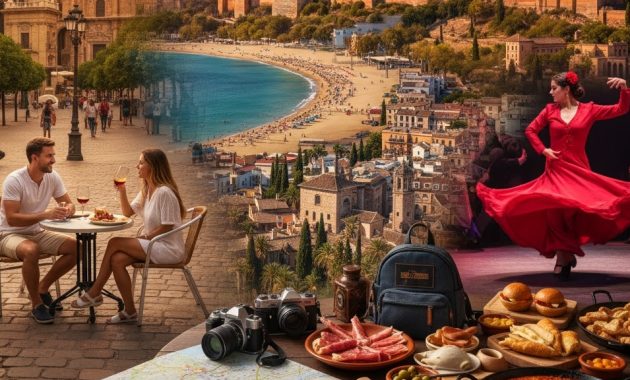
Welcome to the Passion of Spain
If there’s one word that defines Spain, it’s vibrant. From the rhythmic clapping of flamenco dancers in Andalusia to the scent of paella simmering by the Mediterranean, Spain pulses with life, color, and emotion. Whether you’re wandering the ancient streets of Seville, admiring Gaudí’s surreal creations in Barcelona, or sipping sangria under the Madrid sun, this country captures your heart — one moment at a time. This Spain Travel Guide is your all-in-one handbook for exploring the soul of the Iberian Peninsula — packed with must-visit cities, cultural etiquette, transportation tips, and essential insights for your first adventure in España.
Why Visit Spain?
Spain is a dream come true for travelers seeking a mix of history, art, food, and sunshine. With its warm Mediterranean climate, diverse landscapes, and friendly locals, it offers something for everyone.
Here’s why it belongs on your travel list:
- History and Architecture: Roman ruins, Moorish palaces, and Gothic cathedrals.
- Food and Wine: Tapas culture, sangria, and world-class vineyards.
- Festivals and Culture: From La Tomatina to Semana Santa.
- Beautiful Coastlines: Over 5,000 miles of beaches along the Mediterranean and Atlantic.
- Nature and Adventure: Hiking in the Pyrenees, skiing in Sierra Nevada, and scenic drives through olive groves.
Best Time to Visit Spain
Spain’s charm changes with the seasons, and each offers something unique:
- Spring (March–May): Ideal weather, blooming parks, and fewer crowds.
- Summer (June–August): Beach season — but expect heat and higher prices.
- Autumn (September–November): Perfect balance of pleasant weather and local harvest festivals.
- Winter (December–February): Great for city trips and skiing in the north.
???? Traveler’s Tip: If you prefer fewer tourists, visit in late spring or early autumn.
Top Cities to Visit in Spain
1. Madrid – The Heart of Spain
Spain’s capital city is elegant, energetic, and filled with art. Walk along Gran Vía, explore the Prado Museum, and enjoy the lively tapas bars in La Latina.
???? Don’t miss:
- The Royal Palace of Madrid
- Retiro Park for boating and picnics
- Puerta del Sol and Plaza Mayor for iconic photos
???? Pro Tip: Join a free walking tour to learn about Madrid’s royal and revolutionary history.
2. Barcelona – Where Art Meets the Sea
Barcelona is pure magic — a place where Gaudí’s surreal architecture meets the Mediterranean breeze.
???? Highlights:
- Sagrada Família and Park Güell by Gaudí
- La Rambla and Gothic Quarter
- Barceloneta Beach for a relaxing afternoon
???? Traveler’s Tip: Buy Sagrada Família tickets in advance — lines can be long!
3. Seville – The Soul of Andalusia
Flamenco, orange blossoms, and Moorish architecture define Seville. This southern city is all about romance and rhythm.
???? Don’t miss:
- Seville Cathedral and La Giralda Tower
- Real Alcázar (a Game of Thrones filming site)
- Evening flamenco shows in Triana
???? Traveler’s Tip: Visit during Feria de Abril — one of Spain’s most colorful festivals.
4. Granada – The City of the Alhambra
Granada feels like stepping into a storybook. At sunset, the Alhambra Palace glows golden against the Sierra Nevada mountains.
???? Must-see spots:
- The Alhambra and Generalife Gardens
- The Albaicín neighborhood — a maze of whitewashed lanes
- Tea houses offering Arabic mint tea and pastries
5. Valencia – The Home of Paella
Located on Spain’s east coast, Valencia blends futuristic architecture with old-world charm.
???? Top attractions:
- City of Arts and Sciences
- Valencia Cathedral
- Malvarrosa Beach
???? Food Tip: Try authentic Valencian paella — made with rabbit, chicken, and beans.
6. Bilbao – Gateway to Basque Country
Bilbao has reinvented itself from industrial hub to art and design capital.
???? Must-visit:
- Guggenheim Museum
- Pintxos (Basque tapas) in Casco Viejo
- Scenic walks along the Nervión River
Hidden Gems in Spain
Beyond the famous cities, Spain hides dozens of treasures:
- Ronda: A clifftop town with a breathtaking bridge.
- Toledo: The ancient “City of Three Cultures.”
- Formentera: Quieter and more relaxed than Ibiza.
- Segovia: Home to a Roman aqueduct and fairytale castle.
- Picos de Europa: A paradise for hikers and nature lovers.
Food and Drink: A Taste of Spain
Spanish cuisine is as diverse as its regions.
Must-try dishes:
- Paella – Rice dish from Valencia.
- Tortilla Española – Spanish omelet with potatoes.
- Tapas – Small dishes perfect for sharing.
- Gazpacho – Cold tomato soup, ideal in summer.
- Churros con Chocolate – A sweet Spanish breakfast treat.
Drink to try:
- Sangria and Tinto de Verano
- Cava (Spanish sparkling wine)
- Sherry from Jerez
???? Traveler’s Tip: Spaniards eat late — dinner usually starts around 9 p.m.!
Transportation: Getting Around Spain
Spain’s transportation network is efficient and well-connected.
By Train:
Renfe’s high-speed AVE trains link major cities like Madrid, Barcelona, and Seville.
By Bus:
Companies like ALSA and Avanza offer affordable intercity options.
By Car:
Renting a car is ideal for exploring smaller towns or road trips through Andalusia.
By Air:
Domestic flights connect long distances like Madrid to the Canary Islands.
???? Traveler’s Tip: Use Spain’s Renfe rail passes if you plan to visit multiple cities by train.
Cultural Etiquette in Spain
Respect and friendliness go a long way in Spain.
Do’s and Don’ts:
✅ Greet with a handshake or two cheek kisses (informal settings).
✅ Learn a few Spanish phrases — locals appreciate the effort.
❌ Don’t expect everything to open early — siesta hours (2–5 p.m.) are real in smaller towns.
❌ Avoid discussing Catalan or Basque politics unless locals bring it up.
Festivals You Shouldn’t Miss in Spain
Spain’s calendar is packed with festivals that capture its fiery spirit.
Top Celebrations:
- La Tomatina (Buñol): The world’s biggest tomato fight.
- Running of the Bulls (Pamplona): Adrenaline-filled tradition in July.
- Semana Santa (Holy Week): Religious processions in Seville and Málaga.
- Las Fallas (Valencia): Giant effigies burned in a stunning fire festival.
- Feria de Abril (Seville): Andalusian music, horses, and colorful dresses.
Accommodation: Where to Stay in Spain
Spain offers everything from budget hostels to luxury resorts.
Popular choices:
- Paradores: Historic castles and monasteries turned into hotels.
- Boutique hotels in old town centers.
- Rural casas and farm stays in the countryside.
Budget Tip: Book ahead in summer — especially in coastal cities.
Money, SIM Cards & Connectivity
Currency: Euro (€)
Cards: Widely accepted, but carry cash for local shops.
SIM cards: Available from Vodafone, Orange, and Movistar — perfect for tourists needing data.
Traveler’s Tip: Free Wi-Fi is common in cafés and public squares.
Safety Tips for Travelers
Spain is one of Europe’s safest countries, but small precautions help:
- Keep an eye on your belongings in crowded areas.
- Watch out for pickpockets in tourist zones (especially Barcelona).
- Avoid unlicensed taxis.
- Stay hydrated during summer heat.
FAQs About Spain Travel Guide
Do I need a visa to visit Spain?
Citizens from most countries can stay up to 90 days visa-free in the Schengen Zone.
What language is spoken?
Spanish (Castellano), but regional languages include Catalan, Basque, and Galician.
What’s the voltage in Spain?
230V with Type C or F plugs.
Spain Travel Guide : Can I drink tap water?
Yes, it’s safe throughout Spain.
How many days do I need in Spain?
At least 10–14 days for a first trip.
Is tipping required in Spain?
Not mandatory — round up or leave 5–10% for good service.
Are museums closed on certain days in Spain?
Many close on Mondays — check before visiting.
What’s Spain famous for?
Flamenco, football, architecture, tapas, and siesta culture.
Spain Travel Guide How expensive is Spain?
Moderate — cheaper than France or Italy.
What’s the emergency number in Spain?
Dial 112 for any emergency.
Is Spain LGBTQ+ friendly?
Absolutely — Spain is one of Europe’s most inclusive countries.
Can I travel solo in Spain?
Yes! Spain is safe, social, and ideal for solo adventurers.
Final Verdict: Fall in Love with Spain, One Tapas at a Time
Spain is not just a destination — it’s an experience for the senses. From the Moorish arches of Andalusia to the modernist masterpieces of Barcelona, every region whispers its own story. Whether you’re here to feast, fiesta, or simply feel the warmth of the Mediterranean sun, this Spain Travel Guide will help you discover the magic that makes España unforgettable.
Come for the culture, stay for the soul — and leave with a heart forever dancing to the rhythm of Spain.