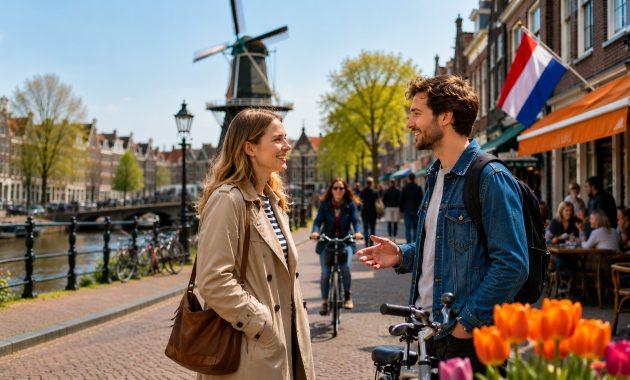
One of the things that surprised me most during my first visit to the Netherlands wasn’t the canals, windmills, or bicycles—it was the people.
The Dutch have a reputation for being direct, practical, and independent. At first, their straightforward communication style can seem blunt to visitors from cultures where indirect speech is the norm. However, after spending time with locals, I realized that Dutch directness isn’t intended to be rude. Instead, it’s rooted in honesty, efficiency, and equality. People generally say what they mean, appreciate openness, and value clear communication over unnecessary formalities.
Understanding Dutch Culture and Etiquette before your trip will not only help you avoid awkward situations but also allow you to connect more naturally with locals. From greetings and dining manners to cycling etiquette and business customs, this guide covers everything first-time visitors should know.
Understanding Dutch Culture
Dutch society is built around several core values that shape everyday life.
These include:
- Equality
- Honesty
- Independence
- Respect for personal space
- Punctuality
- Practicality
- Tolerance
- Environmental awareness
These values influence everything from workplace culture to social interactions.
The Dutch Communication Style
One of the first cultural differences visitors notice is how direct the Dutch are.
Rather than using vague language or avoiding uncomfortable topics, many Dutch people communicate clearly and honestly.
For example:
Instead of saying:
“Maybe we could think about another option.”
A Dutch person might simply say:
“I don’t think that’s a good idea.”
This isn’t considered impolite—it reflects a preference for openness and efficiency.
Tips for Visitors
- Don’t mistake directness for hostility.
- Answer questions honestly.
- Avoid taking constructive criticism personally.
- Feel free to express your own opinions respectfully.
Most locals appreciate sincerity over excessive politeness.
Greetings and Introductions
Dutch greetings are generally relaxed and informal.
Common Greetings
- Hello
- Hi
- Good morning
- Good afternoon
- Good evening
Learning a few Dutch phrases is always appreciated.
Useful examples include:
- Hallo (Hello)
- Goedemorgen (Good morning)
- Dank je wel (Thank you)
- Alsjeblieft (Please / Here you are)
Handshakes remain common in professional settings, while friends and family may greet one another more casually.
Punctuality Matters
Being on time is taken seriously in Dutch culture.
Whether you’re:
- Meeting friends
- Joining a guided tour
- Attending a business meeting
- Visiting someone’s home
arriving late without notice is generally considered discourteous.
Good Practice
Aim to arrive:
- Exactly on time
- Five minutes early
- Notify your host if you’ll be delayed
Respect Personal Space
The Dutch value privacy and personal boundaries.
Avoid:
- Standing too close
- Asking overly personal questions soon after meeting someone
- Touching strangers unnecessarily
People tend to appreciate respectful distances during conversations.
Visiting Someone’s Home
If you’re invited to a Dutch home, it’s considered polite to bring a small gift.
Popular choices include:
- Flowers
- Chocolates
- Wine
- Pastries
Avoid arriving significantly early, as your host may still be preparing.
Once inside:
- Wait until invited to sit.
- Offer to help clear the table.
- Thank your host before leaving.
Dutch Dining Etiquette
Dining customs in the Netherlands are generally informal but still follow certain expectations.
Wait Until Everyone Is Served
It’s polite to begin eating after everyone has received their meal.
Keep Your Hands Visible
Rest your wrists lightly on the edge of the table rather than placing your hands entirely in your lap throughout the meal.
Finish Your Meal
Leaving a small amount of food is acceptable, but wasting large portions may be viewed negatively.
Splitting the Bill
It’s common for friends to split restaurant bills.
Known informally as “going Dutch,” each person usually pays for their own meal unless someone specifically offers to treat the group.
Dutch Tipping Culture
Unlike some countries, tipping isn’t mandatory.
Service charges are often included in restaurant prices.
However, it’s common to:
- Round up the bill
- Leave 5–10% for exceptional service
Taxi drivers, hotel staff, and tour guides also appreciate small tips for excellent service, though they’re not expected.
Dutch Cycling Etiquette
Because bicycles are central to Dutch life, understanding cycling etiquette is essential.
Do
- Stay in designated bike lanes when cycling.
- Signal before turning.
- Lock your bike securely.
- Follow bicycle traffic lights.
Don’t
- Walk in bike lanes.
- Stop suddenly without moving aside.
- Block cycling paths while taking photos.
- Wear headphones so loudly that you can’t hear approaching cyclists.
Cyclists expect others to follow the rules, and bike lanes are often busier than nearby roads.
Dutch Public Transportation Etiquette
Dutch public transport is clean, efficient, and orderly.
Do
- Let passengers leave before boarding.
- Keep noise levels low.
- Offer priority seating to those who need it.
- Tap in and out correctly with your ticket or payment method.
Don’t
- Block train doors.
- Play music without headphones.
- Occupy extra seats with luggage during busy periods.
Queueing and Waiting
Although queues may seem less formal than in some countries, people generally respect the order of arrival.
Avoid:
- Cutting in line.
- Pushing forward.
- Crowding service counters.
Patience is appreciated.
Respect for the Environment
Environmental awareness is deeply embedded in Dutch society.
Visitors are encouraged to:
- Recycle where possible.
- Use reusable shopping bags.
- Dispose of rubbish properly.
- Choose public transport or bicycles over cars when practical.
Many cities actively promote sustainable tourism.
Coffee Shops vs Cafés
This distinction often confuses first-time visitors.
Café
A café serves:
- Coffee
- Tea
- Cakes
- Meals
- Alcoholic beverages
Coffee Shop
In the Netherlands, a coffee shop refers to a licensed establishment where cannabis products may be sold under regulated conditions.
Visitors should understand the difference before entering.
Dutch Alcohol Etiquette
Alcohol is widely available in restaurants, cafés, and bars.
Responsible drinking is expected.
Avoid:
- Excessive intoxication in public.
- Loud disruptive behavior.
- Drinking where prohibited.
Always carry identification if purchasing alcoholic beverages.
Dutch Photography Etiquette
The Netherlands offers countless photogenic locations, but it’s important to be respectful.
Do
- Photograph public landmarks.
- Ask permission before taking close-up portraits of individuals.
- Respect museum photography rules.
Don’t
- Photograph people inside the De Wallen. Photography of window workers is strictly prohibited and considered highly disrespectful.
- Block pathways or cycle lanes while taking pictures.
Business Etiquette
If traveling for work, keep these customs in mind.
Meetings
- Arrive on time.
- Prepare thoroughly.
- Be concise.
- Speak honestly.
Dutch business culture values efficiency and collaboration rather than hierarchy.
Titles are used less frequently than in some countries, and first names are common after introductions.
LGBTQ+ Acceptance
The Netherlands is internationally recognized as one of the world’s most LGBTQ+-friendly countries.
Visitors can generally expect:
- Inclusive attitudes
- Strong legal protections
- Pride celebrations
- Welcoming communities
Respect for diversity is an important aspect of modern Dutch society.
Religion and Diversity
The Netherlands is home to people from many religious and cultural backgrounds.
Visitors should:
- Respect places of worship.
- Dress appropriately when required.
- Be considerate of different traditions and customs.
Dutch society values freedom of belief and mutual respect.
Dutch Shopping Etiquette
Shopping is generally relaxed and efficient.
Helpful tips include:
- Bring a reusable shopping bag, as many stores charge for bags.
- Queue patiently at checkouts.
- Use contactless payment where possible.
- Return shopping carts if required.
Many supermarkets encourage customers to pack their own groceries.
Festivals and Public Celebrations
The Dutch love celebrating national events.
Popular occasions include:
- King’s Day
- Christmas markets
- Carnival in the southern provinces
- Pride events
- Music festivals
If attending festivals:
- Respect local rules.
- Dispose of rubbish responsibly.
- Follow event security instructions.
Common Cultural Misunderstandings
Many visitors initially misunderstand certain aspects of Dutch behavior.
“They’re Rude”
Usually, they’re simply being direct.
“They Don’t Smile Much”
Smiles are genuine rather than automatic.
“Everyone Cycles Fast”
Many locals commute daily by bike and are confident riders. Tourists should take their time and stay aware of their surroundings.
“Restaurants Don’t Rush You”
Correct. Dining is often relaxed, and you’ll usually need to ask for the bill when you’re ready to leave.
Essential Do’s and Don’ts
Do
- Be punctual.
- Respect bicycle lanes.
- Speak honestly.
- Recycle when possible.
- Carry a reusable shopping bag.
- Learn a few Dutch phrases.
- Respect personal space.
- Say “thank you.”
Don’t
- Walk in bike lanes.
- Assume directness is rudeness.
- Arrive late without notice.
- Photograph people without permission.
- Speak loudly on public transport.
- Litter.
- Expect free plastic shopping bags.
- Forget to ask for the bill in restaurants if you’re ready to leave.
Helpful Dutch Phrases
| English | Dutch |
|---|---|
| Hello | Hallo |
| Good morning | Goedemorgen |
| Thank you | Dank je wel |
| Please | Alsjeblieft |
| Excuse me | Pardon |
| Yes | Ja |
| No | Nee |
| Goodbye | Tot ziens |
Using even a few basic phrases often earns a friendly response from locals.
FAQs – Dutch Culture and Etiquette
Are Dutch people friendly?
Yes. They are generally welcoming, although their communication style is often more direct than visitors may expect.
Is tipping expected in the Netherlands?
Not usually. Rounding up the bill or leaving a small tip for excellent service is appreciated but not required.
Why are the Dutch so direct?
Direct communication is seen as honest, efficient, and respectful rather than impolite.
Can I speak English at the Netherlands?
Yes. English is widely spoken throughout the Netherlands, particularly in cities and tourist areas.
Should I learn Dutch?
It’s not essential, but learning a few basic phrases is appreciated.
Is it okay to split the bill in the Netherlands?
Yes. Splitting the bill is very common in Dutch culture.
Can I walk in bike lanes in the Netherlands?
No. Bike lanes are reserved for cyclists and should be kept clear.
Are the Dutch punctual?
Very much so. Arriving on time is considered respectful.
Can I photograph the Red Light District?
No. Photographing window workers in De Wallen is prohibited.
Are plastic bags free in the Netherlands?
Usually not. Many shops charge for bags, so bringing a reusable one is a good idea.
How should I behave on public transport in the Netherlands?
Keep noise to a minimum, let passengers exit before boarding, and avoid blocking doors or aisles.
What is the most important Dutch cultural tip?
Be respectful, punctual, and open-minded. Understanding Dutch directness and following local etiquette will help you enjoy smoother interactions throughout your trip.
Final Verdict: Understanding Dutch Culture Makes Every Trip Better
Learning about Dutch Culture and Etiquette is one of the best ways to enrich your visit to the Netherlands. While the country’s famous canals, windmills, and cycling paths attract millions of visitors each year, it’s the Dutch approach to honesty, equality, punctuality, and mutual respect that often leaves the strongest impression.
By respecting local customs, staying aware of cycling etiquette, embracing direct communication, and approaching cultural differences with curiosity, you’ll not only avoid common misunderstandings but also gain a deeper appreciation for everyday life in the Netherlands. Whether you’re exploring Amsterdam, cycling through the countryside, or sharing a meal with locals, a little cultural awareness goes a long way toward creating a more authentic and memorable travel experience.