Stepping Into the Heartbeat of Barcelona
The first time I stepped onto La Rambla, it felt like entering a living postcard — a swirl of colors, voices, flowers, and endless movement. The sun filtered through tree canopies as locals hurried past, tourists paused for photos, and artists set up their easels. A breeze from the port carried the scent of churros, roasted chestnuts, and sea air. This La Rambla Guide will take you through Barcelona’s most legendary boulevard from end to end — the history beneath your feet, the must-see stops, the markets, the cafés, the hidden corners, and the safety tips most visitors wish they had known beforehand.
If you’re ready for a walk through the city’s most iconic street, let’s begin the journey.
What Is La Rambla? A Quick Overview
La Rambla is a 1.2 km tree-lined pedestrian boulevard stretching from Plaça de Catalunya down to Port Vell. You’ll find:
- historic buildings
- open-air markets
- cafés and terraces
- street performers
- flower stalls
- museums and theatres
- port views at the southern end
It’s lively, crowded, chaotic at times — and unmistakably Barcelona.
How to Explore La Rambla (Walking Route)
Start at Plaça de Catalunya and walk south toward the Columbus Monument. This route gives you the most natural flow and reveals the boulevard’s story in perfect sequence.
1. Plaça de Catalunya: The Grand Gateway
Your walk begins at this busy square — a central hub surrounded by fountains, sculptures, and major shopping streets like Passeig de Gràcia.
Tip: Grab a coffee here before heading down La Rambla.
2. Font de Canaletes: Make a Wish to Return
Just a few meters down, you’ll see the iconic Canaletes Fountain. Legend says:
Drink from it, and you’ll return to Barcelona.
Whether you believe the myth or not, it’s a must-stop photo spot.
3. Rambla dels Estudis: The Historical Stretch
Named after a medieval university once located here, this section is filled with:
- newspaper kiosks
- shops
- street performers
You’ll begin to feel the pulse of La Rambla’s constant movement.
4. Rambla de les Flors: The Flower Rambla
Probably the most colorful part of the boulevard. Flower stalls have been here since the 1800s, filling the air with fresh floral scents.
A romantic stop — especially in the late afternoon golden light.
5. La Boqueria Market: Barcelona’s Food Heaven
No La Rambla Guide is complete without this world-famous market.
Step inside and you’ll be greeted by:
- fresh fruits & juices
- tapas bars
- seafood stalls
- spices, nuts, cured meats
Tip:
→ Go early for quieter browsing.
→ Try a fresh fruit juice or seafood tapas at El Quim or Bar Pinotxo.
6. Rambla de Sant Josep: Art & Bohemia
As you continue, you’ll pass artists selling portraits and landscapes. La Rambla has always been a meeting point for creatives, and this section reflects that spirit.
7. Liceu Theatre: Barcelona’s Opera Jewel
Stop at the Gran Teatre del Liceu, a stunning opera house dating back to 1847.
You can tour the interior if you’re interested in music and architecture.
8. Plaça Reial: A Hidden Oasis Just Off La Rambla
Turn right at the small alley next to Liceu — you’ll enter Plaça Reial, one of Barcelona’s most beautiful squares.
Expect:
- palm trees
- arcaded restaurants
- lively terraces
- Gaudí-designed lamp posts
It’s a perfect detour for lunch or evening drinks.
9. Rambla dels Caputxins: Culture & Architecture
Here you’ll find historic façades and cultural institutions, with a mix of cafés and souvenir shops. The boulevard widens slightly, giving more breathing space from the crowd.
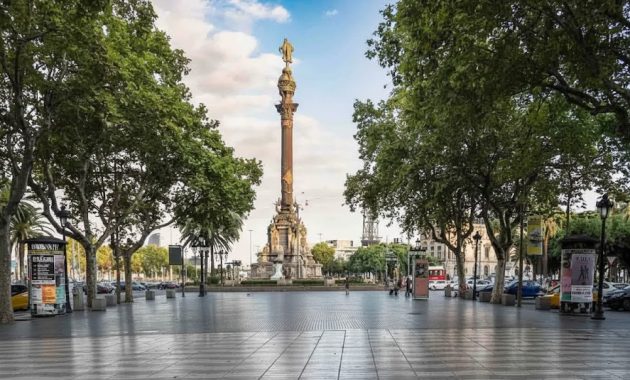
10. Columbus Monument (Mirador de Colom)
The walk ends at the towering Columbus Monument, where Christopher Columbus points toward the sea.
You can take an elevator to the viewing platform for sweeping port views.
From here, continue to Port Vell or stroll toward Barceloneta Beach.
Shopping Along La Rambla
La Rambla itself is not the best place for quality shopping (too touristy), but nearby streets offer better finds:
- Portal de l’Àngel – affordable brands
- Carrer Avinyó – boutiques
- El Corte Inglés at Plaça Catalunya
For souvenirs, check the side streets instead of La Rambla’s central stalls.
Food & Drinks Along La Rambla: Honest Tips
La Rambla has many restaurants, but most are overpriced tourist traps.
Instead:
- Eat inside La Boqueria
- Head into Gothic Quarter or El Raval for authentic tapas
- Try Plaça Reial for drinks (pricey but atmospheric)
Street Performers, Living Statues & Artists
A beloved La Rambla tradition. You’ll see:
- living statues painted gold
- musicians
- painters
- dancers
Evenings are especially lively.
Safety Tips for La Rambla (Very Important)
La Rambla is safe, but pickpocketing is common.
To protect yourself:
- keep bags zipped
- avoid back pockets
- stay alert around performers & crowds
- avoid eating at overly pushy restaurants
- don’t leave phones on café tables
At night, stick to well-lit areas.
Best Time to Visit La Rambla
- Morning: calm, great for photos
- Afternoon: busiest, vibrant
- Evening: beautiful lights, lively but crowded
Avoid late-night wandering alone in quieter southern sections.
FAQs — La Rambla Guide
How long does it take to walk La Rambla?
About 20–30 minutes without stops, but usually 1–2 hours with attractions.
Is La Rambla safe?
Yes, but pickpocketing is common. Stay alert.
When is the best time to visit La Rambla ?
Early morning or evening for the best experience.
Is La Rambla suitable for kids?
Yes — but hold hands in crowds.
Can I take photos freely?
Absolutely — plenty of photogenic corners.
Is La Boqueria open every day?
Closed Sundays; avoid going during late afternoon when many stalls shut.
Are the restaurants good in La Rambla ?
Some are decent, but many are overpriced tourist traps. Go off La Rambla for better food.
Can I walk La Rambla at night?
Yes, but avoid deserted side streets.
What is La Rambla famous for?
History, markets, artists, architecture, and street life.
Is there metro access to La Rambla?
Yes — Catalunya, Liceu, and Drassanes stations run along the boulevard.
Can I visit La Rambla with a stroller?
Yes — wide pedestrian area, though crowds may slow you down.
Is it wheelchair-friendly?
Reasonably accessible, though some cobblestones and crowds can be challenging.
Is there nightlife on La Rambla?
Mostly around Plaça Reial and connecting streets, not directly on the boulevard.
Final Verdict: La Rambla Is a Walk Through Barcelona’s Soul
La Rambla is more than a street — it’s a living stage where Barcelona performs daily. It’s loud, colorful, sometimes overwhelming, always unforgettable. Even if it’s touristy, you can’t visit Barcelona without walking it at least once.
This La Rambla Guide helps you enjoy the boulevard with clarity, awareness, and the perfect walking route so you experience its magic — not the stress.
When you stroll under these iconic trees, surrounded by history and life, you’ll understand why La Rambla has been the heart of Barcelona for centuries.